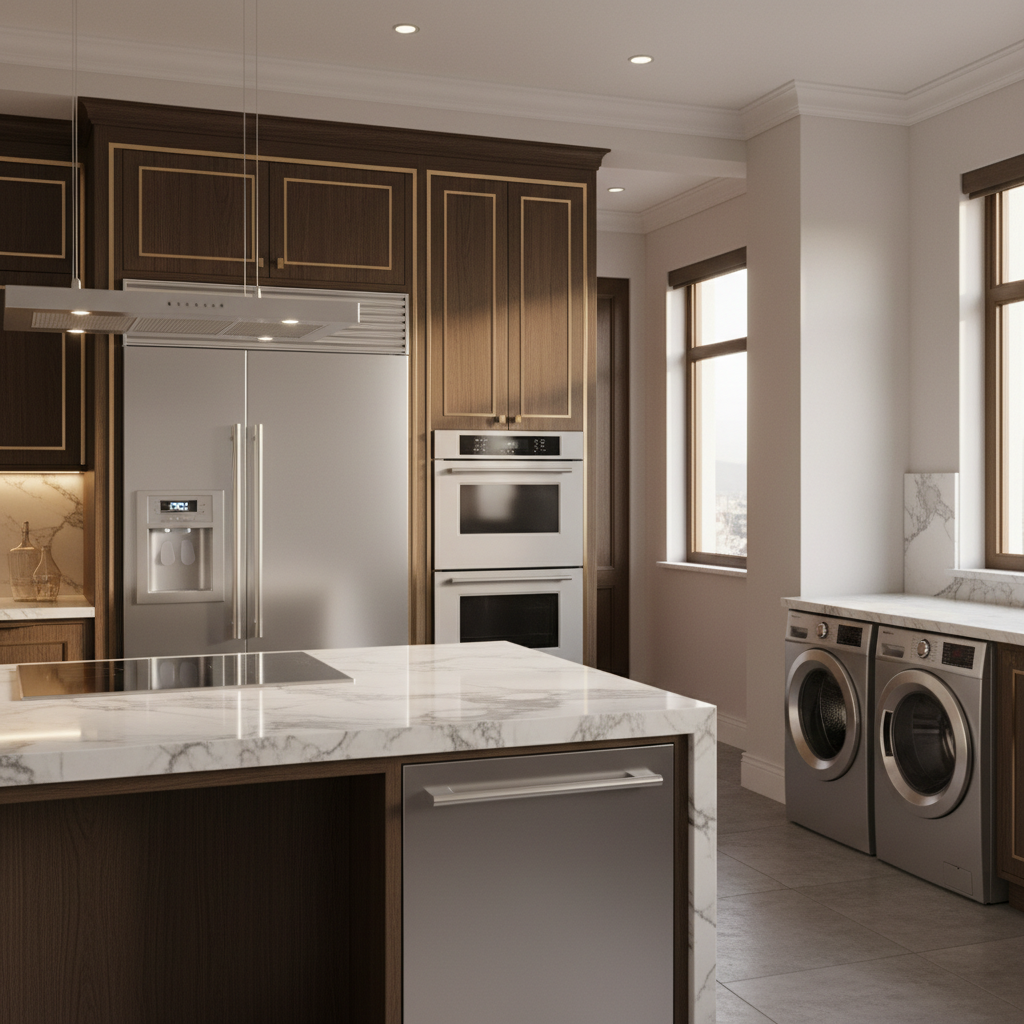
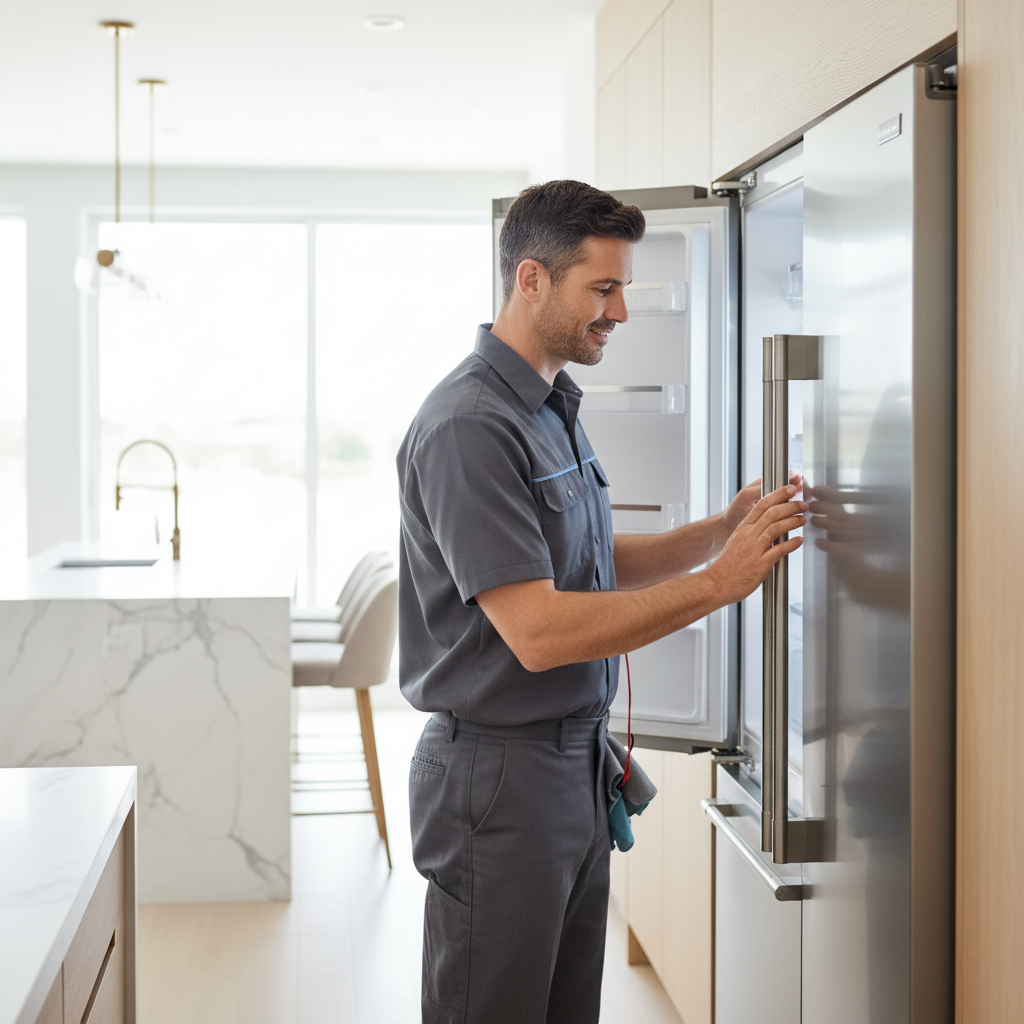
GE Refrigerator Repair
The condenser fan motor fails and the cabinet runs warm because the compressor area cannot shed heat. We check condenser airflow first because tight alcoves and built-in installs trap heat and trigger warm spots or short-cycling.
Condenser airflow testing shows whether the unit is heat-bound or losing cooling from a sealed-system or defrost problem. We measure condenser temperature rise and listen for fan speed changes when the compressor loads.
A “not cooling” complaint in General Electric refrigerators often points to a frosted evaporator coil or a weak evaporator fan. Temperature fluctuations in a General Electric refrigerator often point to a bad thermistor or a control not reading correctly. Strange noises often point to an ice maker fan, an evaporator fan blade, or a failing compressor mount.
GE Dishwasher Repair
“Why is my dishwasher not draining?” A blocked dishwasher drain path usually starts at the filter screen or a jammed drain pump impeller.
Leaking water at the base often points to a worn door gasket or a loose pump seal. An error code often points to a float switch or a heating circuit fault. Not cleaning often points to a clogged spray arm or a weak wash motor.
GE Washer Repair
We start washing machine repair by running a drain-and-spin test. The drain pump and its filter trap cause “not draining” when coins or lint block flow.
A washer that won’t spin often points to a lid lock or a speed sensor signal loss. Unusual noises in a washing machine often point to a worn bearing or a loose pulley. A unit that won’t close often points to a misaligned door strike on front-loaders in tight laundry nooks.
GE Dryer Repair
Restricted venting causes long dry times because the heater cycles off on high temperature. We check airflow and the high-limit thermostat because heat buildup mimics a failed heater.
Not heating often points to a burned heating element or a failed gas igniter. On a General Electric dryer, strange noises usually mean worn drum rollers or an idler pulley. Not starting on General Electric dryers often points to a door switch or a blown thermal fuse.
GE Oven Repair
“My oven is not heating right” usually traces back to a failed bake igniter, the part that lights the oven’s gas, or a weak bake element in electric models. We check the bake heat source first because wall and slide-in installs depend on even heat distribution, and failures show as undercooked centers or burnt edges.
Bake heat testing shows whether the oven can reach setpoint under load or if the control stops heat early. We watch preheat time and cycle behavior to separate a weak igniter from a sensor or control problem.
An F1 error code usually means a stuck keypad or a control board failure. Temperature fluctuations often point to a drifting oven sensor or board failures in the relay outputs. Leaking badly under the oven cavity often points to a spill path and a damaged door seal, not drain pump failures.
GE Cooktop Repair
The infinite switch fails and one burner stays on high or will not heat at all. We test the switch output because daily use makes element response problems stand out fast.
A burner that won’t heat often points to a failed surface element or a broken receptacle. A burner that won’t turn off often points to welded contacts in the control board on some models. Clicking with no flame often points to a dirty igniter or a cracked spark electrode.
GE Microwave Repair
A failed magnetron or high-voltage diode usually causes a running unit with no heat.
Loud operation can come from a worn stirrer motor or a cooling fan rubbing. Poor venting on an over-the-range unit can come from a grease-packed filter or a stuck damper. An error code can trace back to a door switch mount that has shifted.
GE Freezer Repair
We start by checking freezer temperature at the rear vent. The evaporator fan motor causes warm freezer temperature when it slows down or stops.
Frost buildup on the back wall often points to a defrost heater or defrost thermostat fault. A freezer door that will not seal often points to a warped gasket or a rail problem on drawer styles. Unusual noises often come from an ice maker fan or a fan blade hitting ice.
GE Ice Maker Repair
Low water flow causes small, misshapen cubes because the mold never fills to the right level. We check the inlet valve and the fill tube first because built-in and refrigerator ice makers show clumping and intermittent dumping when water delivery varies.
Water fill testing shows whether the valve opens with proper pressure or if the fill tube is freezing from a seep. We watch a harvest cycle and measure fill time against the mold size.
No ice production can mean a failed ice maker module or a freezer that is not cold enough. Clumping in the bin usually points to a door seal leak or a flap not closing. Leaking water under the ice box usually points to a cracked fill cup or a loose line connection.
GE Gas Range Repair
“The burners won’t light” usually means the spark module is not sending voltage to the electrodes. We check ignition spark at each burner because one dead channel can take out multiple heads.
A burner that clicks nonstop usually means moisture at the switch harness. A burner that lights then goes out points to a dirty flame sensor on sealed burner designs. Gas smell with no ignition points to a stuck valve or a mis-seated burner cap.
GE Wall Oven Repair
The oven temperature sensor fails and one cavity drifts hot or cold during long bakes. We check sensor resistance first because a double wall oven depends on accurate temperature control between cavities.
Sensor and relay testing shows whether the control is reading correctly or if the board is misfiring the bake circuit. We compare setpoint to actual temperature and watch how each cavity cycles.
During self-clean, an error code can signal a stuck latch switch or a control fault. Uneven baking often points to a convection fan not running or a weak element. A cavity that will not heat usually means the control board relay has failed.
GE Wine Cooler Repair
“Why won’t my wine cooler hold temperature?” A failing main control board often causes temperature fluctuations that swing several degrees.
Not cooling usually means a weak compressor start device or a blocked condenser coil. A condenser fan blade rubbing a shroud can cause unusual noises. Water pooling inside can come from a clogged drain channel from condensation.
GE Column Refrigerator Repair
We check the evaporator fan speed first to rule out a sealed-system issue versus an airflow issue. The fan failure causes warmer upper shelves and crisper drawers not staying cold enough in built-in columns.
When temperatures swing, we check a sensor out of range or a damper not moving freely. Frost on packages usually means a door not sealing or a freezer door left ajar. Short-cycling often points to restricted condenser airflow behind the toe-kick.
GE Hood Repair
Grease buildup causes a noisy fan because the blower wheel goes out of balance. We check the filters and ducting first because lingering smells and smoke usually track back to restricted airflow.
A hood that won’t start usually means a failed switch or a control board fault. Lights not working usually trace to a socket heat failure or an LED driver. Poor suction usually means a blocked damper or a crushed duct run.